
Home | Multi-sports fields
multi-sports
fields
Gregori International, specialist in sports surfaces, multi-sports fields and local playgrounds
leisure and sports complexes
local
GREGORI INTERNATIONAL CAN HELP YOU CREATE LOCAL OUTDOOR LEISURE, SPORTS AND WELLNESS COMPLEXES WITH FREE ACCESS.
- Social and inter-generational cohesion: by offering a common place to practice sports, these facilities bring together young people, adults and seniors, strengthening social ties and creating spaces for exchange and conviviality.
- Health: combating a sedentary lifestyle and contributing to the health and wellbeing of people of all ages, through inclusive recreational and sports facilities that are accessible to all
- Local vitality and appeal: a multi-sports complex enhances the quality of life in neighbourhoods, breathes new life into public spaces and makes local authorities more attractive to residents and visitors alike.
- Education and youth development: located within schools and close to residential areas, these facilities encourage children to take up sport, learn about fair play and develop social skills from a very young age.

From bespoke design to implementation, we support you in the creation of your new living spaces, for rapid implementation and a direct impact on everyone’s well-being.


Surfaces in
resin
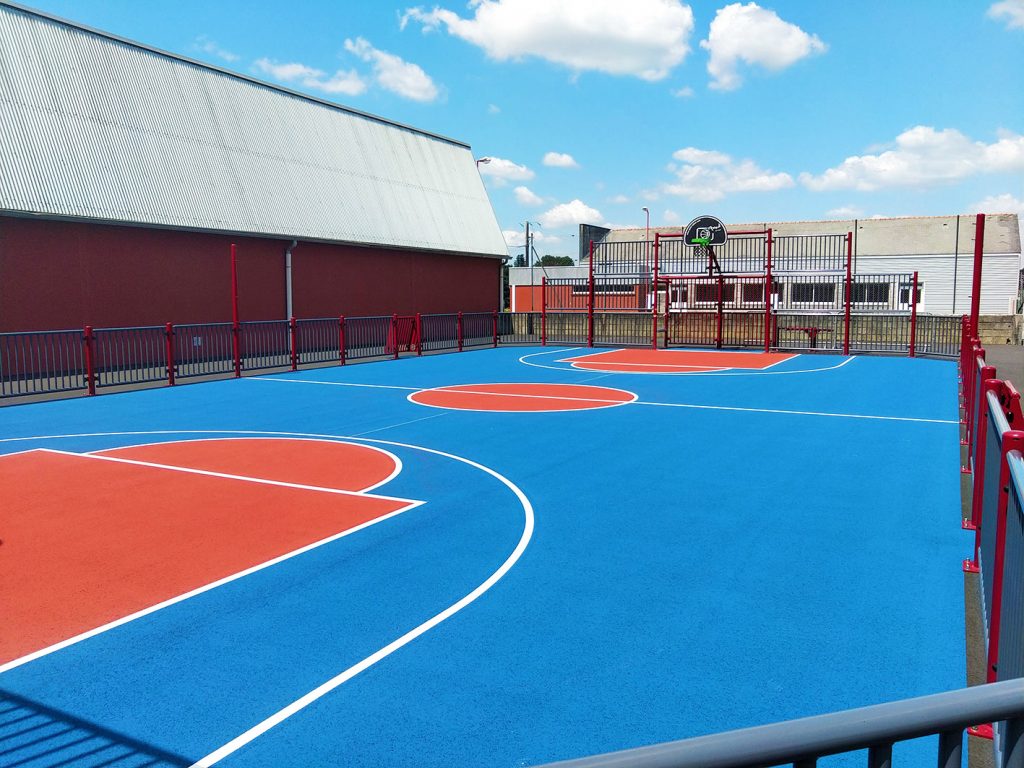
Construction of multi-sports fields in resin: acrylic or polyurethane
The construction of a resin multisport pitch offers a durable and versatile solution for soccer, basketball, handball and tennis. Whether acrylic resin or polyurethane, these surfaces guarantee comfortable play, weather resistance and easy maintenance. Suitable for schools, sports complexes and local authorities, resin multisports pitches combine technical performance, safety and aesthetics, while blending harmoniously into any sports development project.
other projects
multi-sports fields
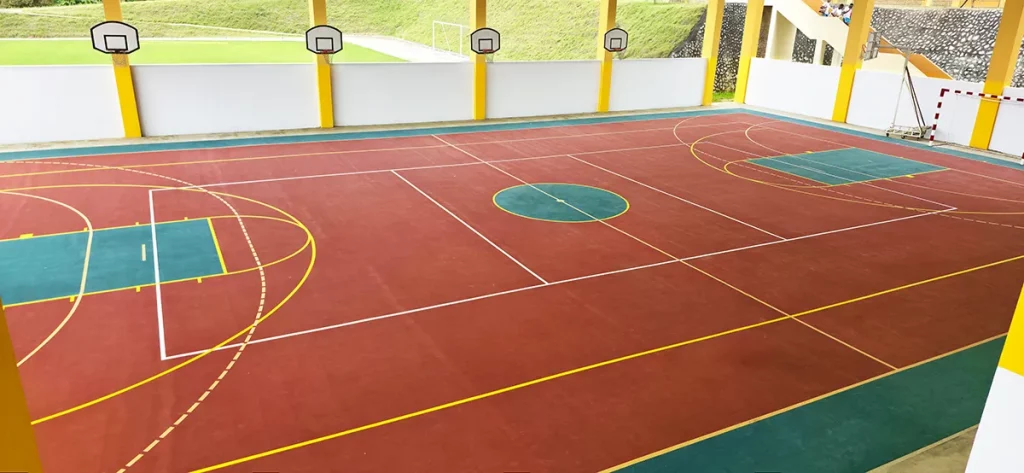
Why build a multi-sports field?
The construction of this type of land is currently in vogue because it provides a concrete response to several objectives:
Promotes sports and social diversity by allowing several generations to practice in the same place.
Reduces development and maintenance costs with a unique and sustainable infrastructure.
Provides ongoing animation within communities or schools.
Reinforces the green and dynamic image of the territories.
What are the steps in the construction of a multi-sport field ?
The construction of a multi-sport field follows several key steps
- Site study and design : soil analysis, choice of location, sizing and definition of the sports to be integrated (football, basketball, volleyball, handball, etc.).
- Earthworks and land preparation : levelling, compaction and setting of slopes for water drainage.
- Drainage installation : network of pipes and filter layers to ensure a dry and passable surface.
- Installation of the sports surface : synthetic turf, asphalt, resin or acrylic surface depending on the uses and climate.
- Installation of equipment : fences, goals, baskets, floor markings, lighting and sports furniture.
- Quality control and acceptance : verification of finishes, flatness, rebound and resistance tests to ensure compliance.
What is the cost of building a multi-sports field?
The cost of building a multi-sports pitch depends heavily on its size, the type of surface, the equipment and any additional features (fencing, lighting, drainage, etc.). Here are some purely indicative figures, which are not binding on the company; here is a price range:
- For standard dimensions (24×12 m): a budget ranging from €50,000 to €80,000.
- For top-of-the-range properties: a budget of up to €190,000 or more.
Construction of a multi-sports field: which technique to choose?
Choosing the right technique to build a multi-sport field depends on the intended use, the budget and the level of performance sought
- Acrylic resin (basketball, handball, tennis): applied to draining or asphalt concrete, it offers a regular bounce, good adhesion and minimal maintenance. UV and weather resistant, it is suitable for outdoor school or communal grounds
- Fibrillated synthetic turf (football, multi-sport): made of plastic fibres on a weft with sandblasted infill, it offers excellent cushioning, effective drainage and intensive use all year round. Versatile, it allows several sports markings and remains passable in all weathers
The best technique is the one that guarantees stability, playing comfort and low maintenance in the long term. A precise diagnosis of the land and an informed choice of pavement ensure a long-term investment.
What dimensions to build a multi-sports field?
- Compact format (school, neighbourhood): approx. 15 × 25 m = 375 m².
- Intermediate format (communal): 18 × 30 m = 540 m².
- Full size (heavy use): 22 × 44 m = 970 m², compliant with most standardised multi-sport kits.
What are the standards and regulations for the construction of a multi-sports field?
The construction of a multi-sport field must comply with strict standards to guarantee safety, accessibility and quality of play. These requirements include dimensions, siding, fencing, lighting, and compliance with federal rules.
NF EN 15312 : European standard for sports equipment with free access (dimensions, resistance, safety).
NF P90-110 : requirements for fences and ball guards (min. height 3 m, no protruding angles).
EN 14877 standard : outdoor sports surfaces (grip, permeability, damping).
By applying these standards from the design stage, the result is equipment that is reliable, durable and perfectly suited to intensive use. This is the key to securing the investment and ensuring quality sports practice.
What are the technical constraints when building a multi-sports field?
Building a multi-sport field requires mastering several technical constraints related to the soil, drainage, choice of surface and resistance of the equipment. Each element must be sized to withstand frequent and varied use. Here are the main constraints:
- Nature of the soil
- Drainage
- Foundation
- Climate
- Coating
- Mechanical resistance : structures in accordance with NF EN 15312
- Lighting and fencing
- Maintenance
Anticipating these constraints helps to prevent unevenness, premature wear or drainage problems. Thorough ground preparation ensures that the facilities are durable, high-performing and safe for all users.