
Home | Sports fields
sports
fields
Construction and renovation of sports fields
With 50 years’ experience in turf cultivation techniques and sports turf, Gregori International is a leading expert in the construction, renovation and refurbishment of your sports pitches, ensuring they are fit to host major competitions in accordance with various standards (FIFA, UEFA, World Athletics Standards, ICC, etc.). Gregori International supports you throughout your project from start to finish.
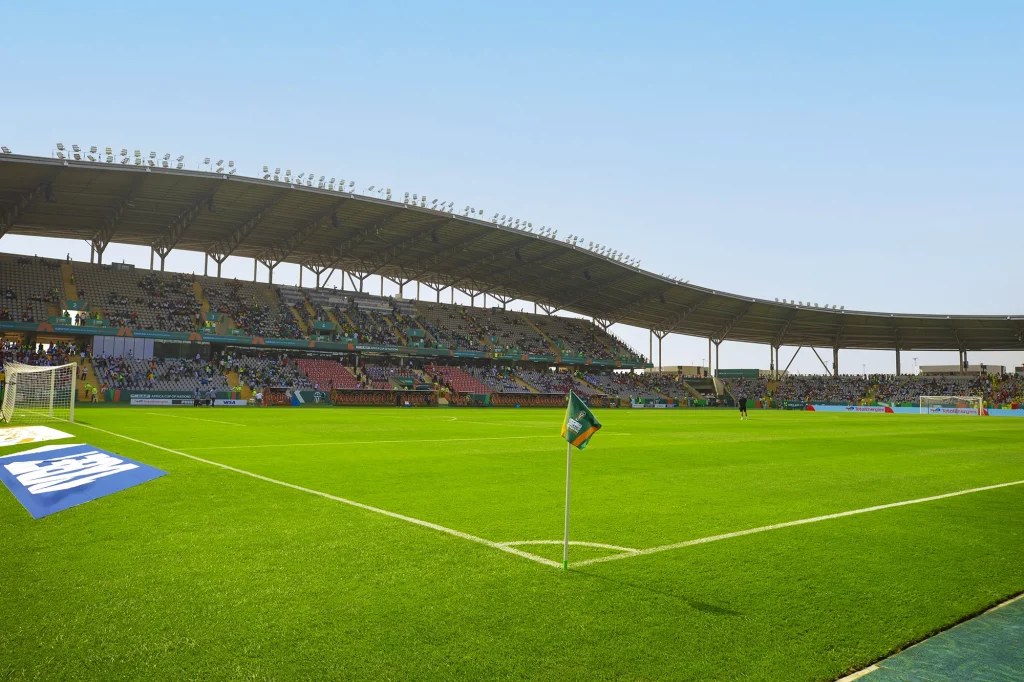
Our services
for sports fields
Preliminary studies, technical studies, carrying out the works, maintenance and advice
Gregori International can take care of your project from A to Z. Working with the world’s leading manufacturers, we offer you a complete range of technical solutions, perfectly tailored to the specific requirements of each project.
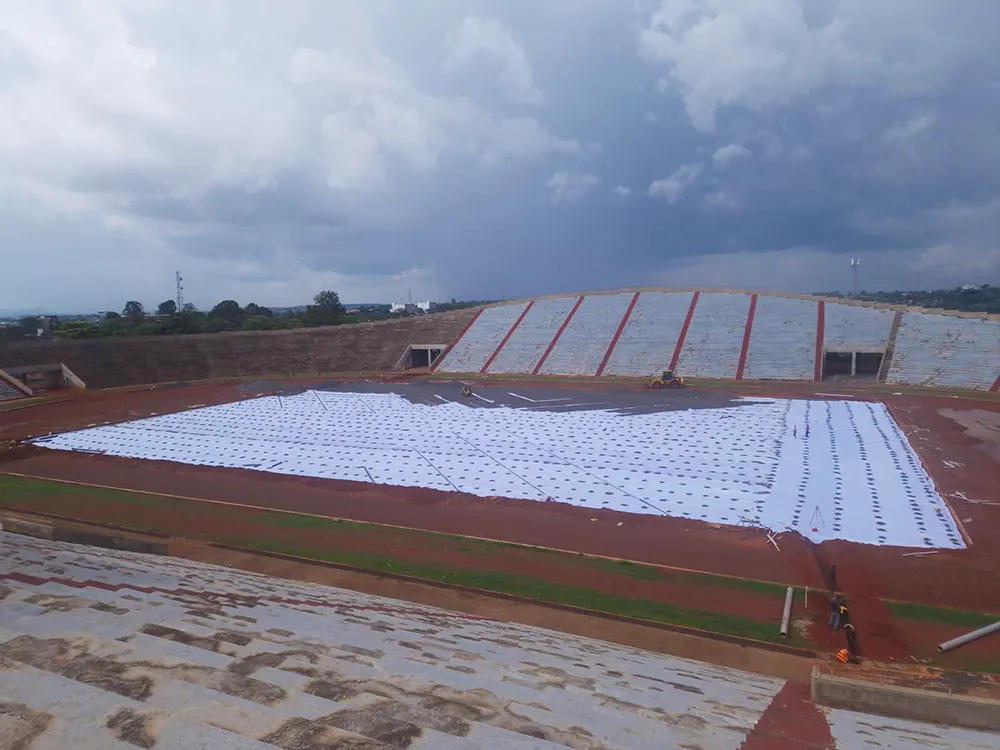
- Step 1: Base shape
- Step 2: Drainage networks
- Step 3: Drainage layer
- Step 4: Growth medium
- Step 5: Watering after sowing
- Step 6: Athletics track

Our Design Office handles all stages of project preparation: drawings, documentation
technical… right through to acceptance.
It takes into account the reality of the terrain, material and water resources, and other aspects that may have an impact on the worksite.

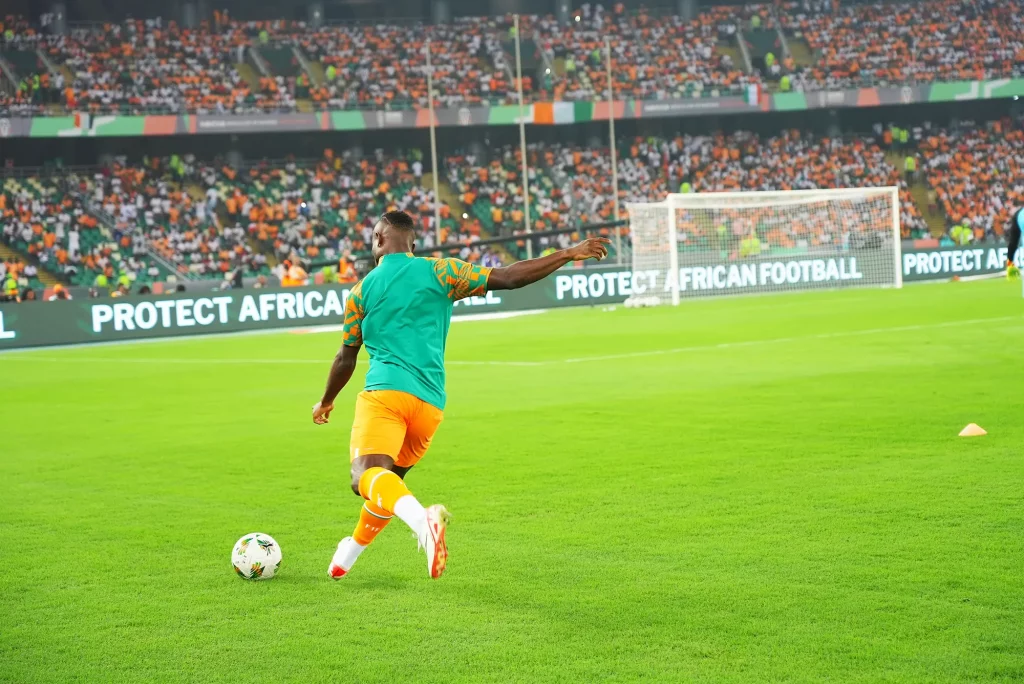
Specialist
sports surfaces
Working with the world's leading manufacturers, we can offer you a complete range of technical solutions to meet your specific requirements.
Athletics track: stabilised surface or high-end athletics track complying with World Athletics Standards following certification. Primer, SBR & resin layer, pore-filling layer, final EPDM & coloured resin layer
Grass surfaces: Natural turf , Premium hybrid turf, FiberSoil turf
Synthetic surfaces: Artificial turf – FIFA Quality Pro and resin surfaces for multi-sport pitches.
Other projects
sports field
With 50 years’ experience in turf management and sports turf, Gregori International is recognised as an expert in the construction, renovation and upgrading of your sports pitches, ensuring they are fit to host major competitions in accordance with various standards (FIFA, UEFA, World Athletics Standards, ICC, etc.).
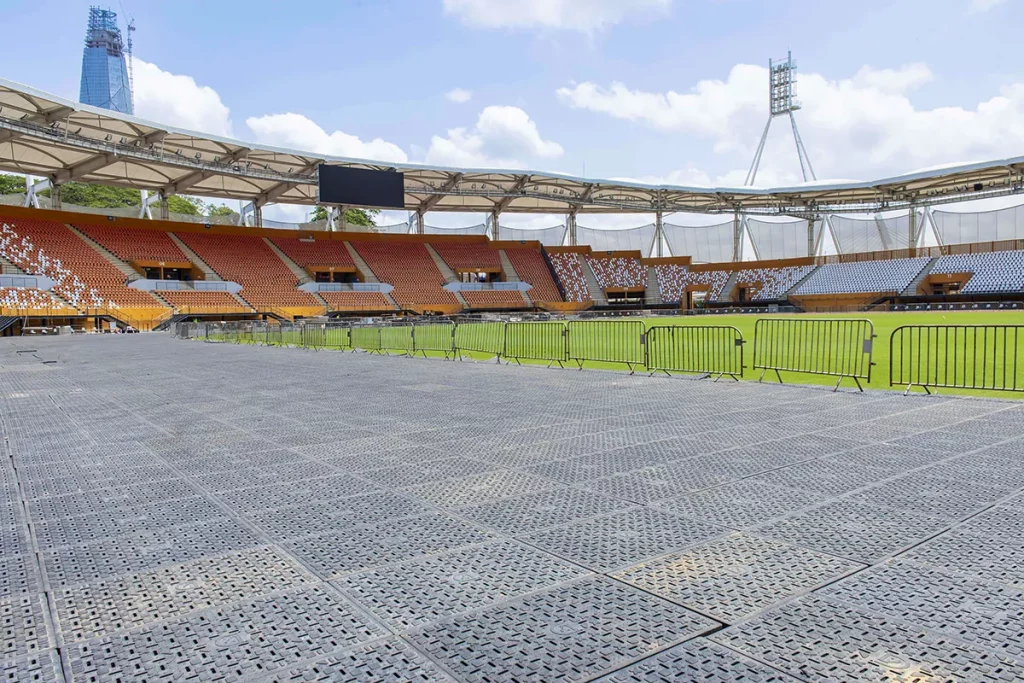
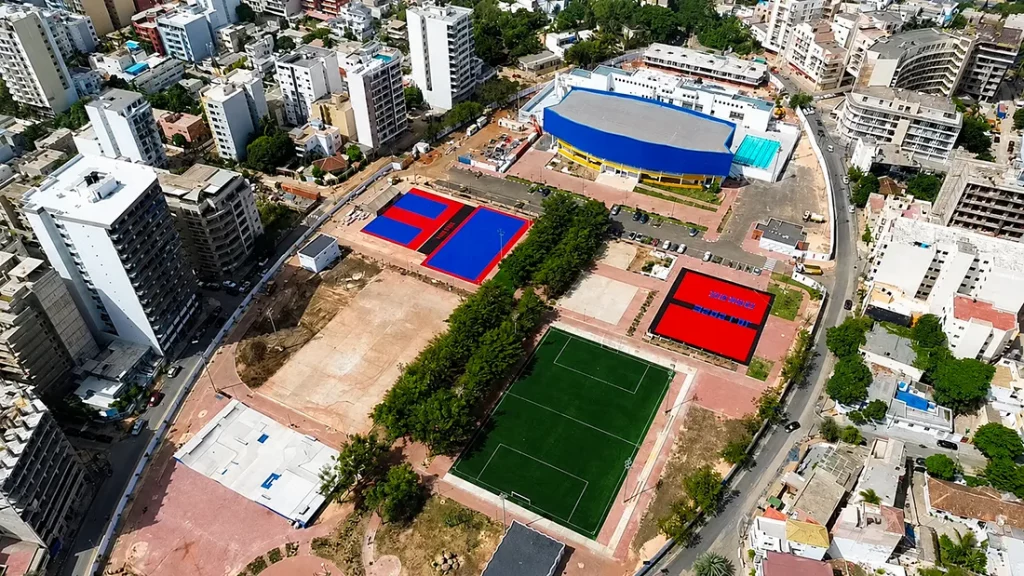
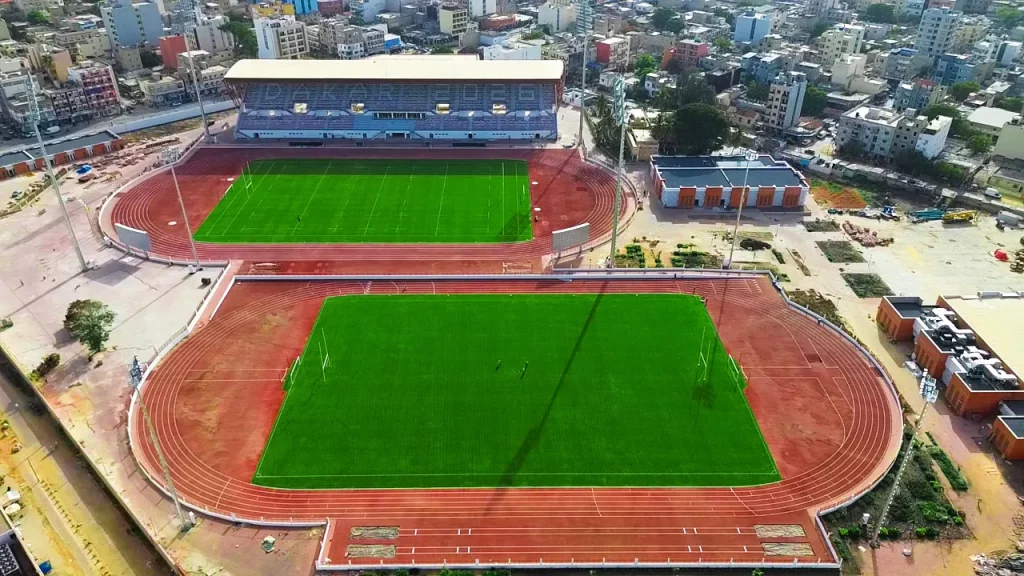
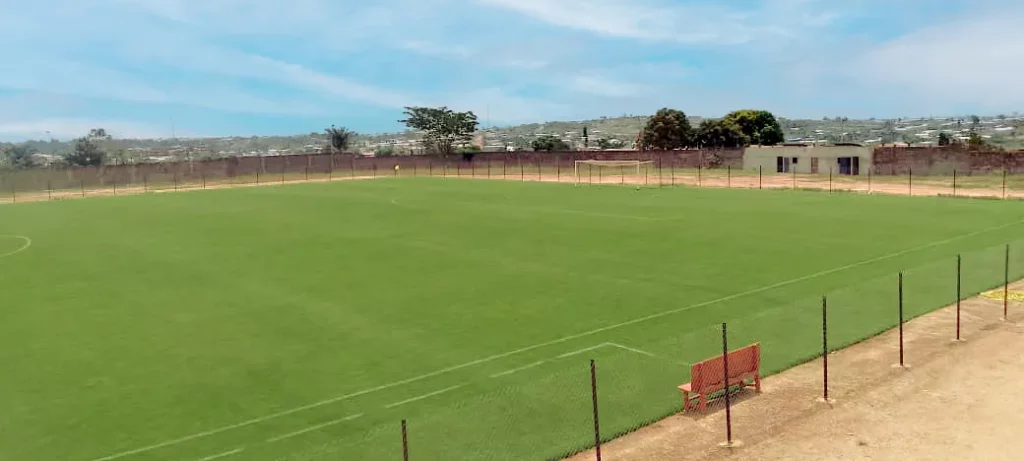
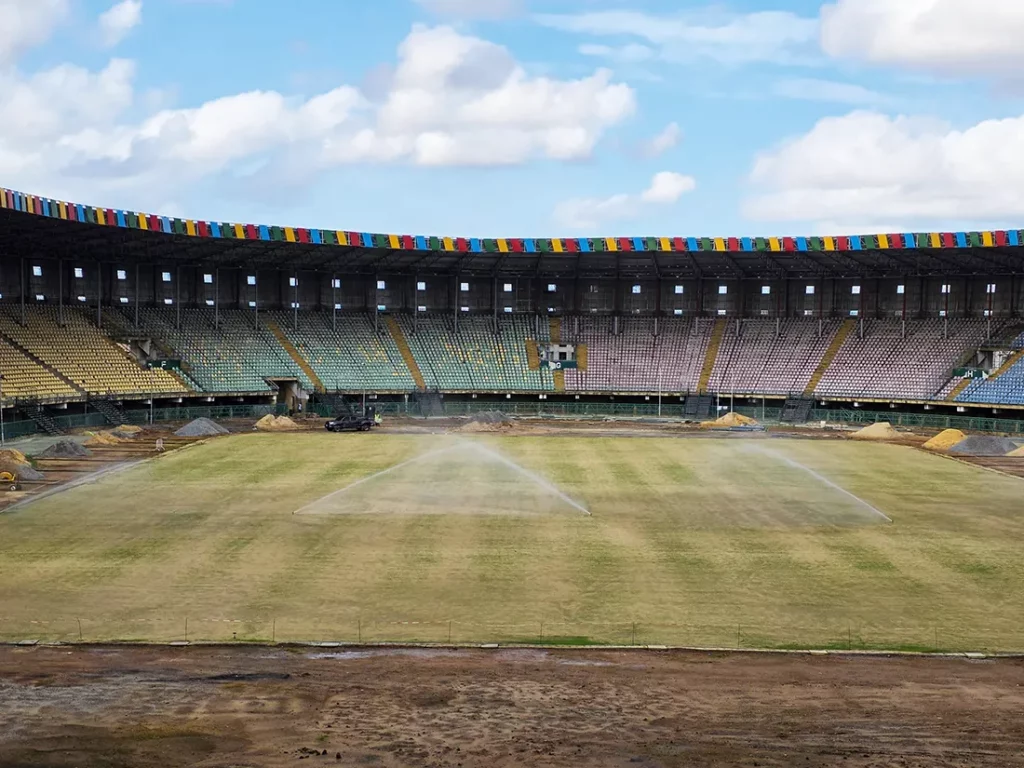
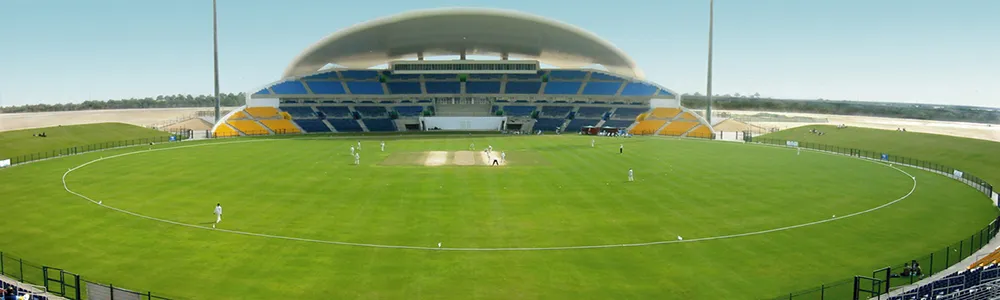
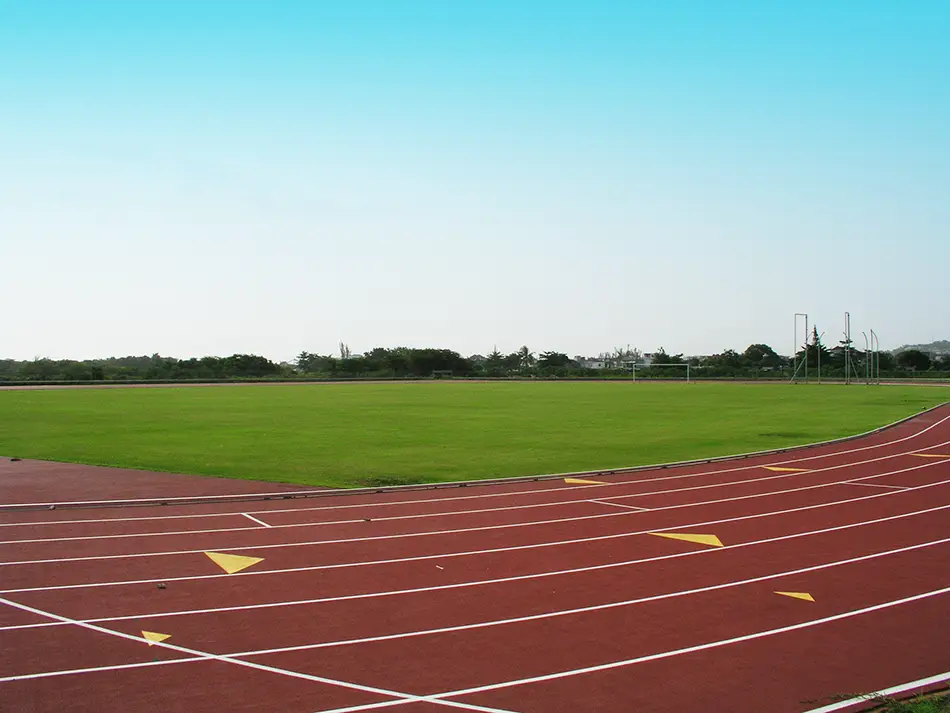
Who builds sports fields?
The construction of sports fields is carried out by companies specializing in sports infrastructure. These companies ensure the design and complete construction of football, rugby, tennis, athletics or multi-sport fields, from the technical studies to the game.
Who are the biggest sports field builders?
The major sports field builders are companies recognized for their technical expertise, their ability to deliver turnkey projects and their compliance with international standards. Among the leaders in the sector is Gregori International, a leading French player in Africa, Europe and the Middle East, specialising in football pitches, golf courses, stadiums and local sports facilities.
How to build a sports field?
The construction of a sports field requires a global technical approach, combining engineering, high-performance materials and specialized know-how.
Each project is based on a precise analysis of the site (topography, nature of the soil, climate, sports use) in order to design a suitable structure — whether it is a football, rugby, athletics or multi-sport field. The choice of surface (natural, synthetic or hybrid grass) depends on the customer's needs and international sports standards (FIFA, FFR, IAAF, FIBA, etc.).
What are the stages involved in building a sports ground?
- Soil study and engineering design : geotechnical analysis, grading, drainage and choice of turf type (natural, synthetic or hybrid).
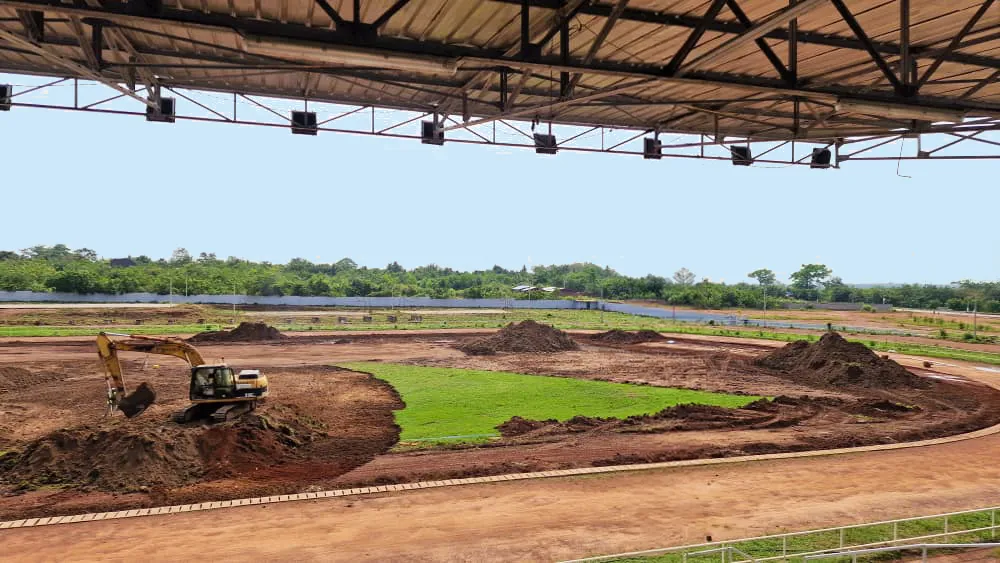
- Earthworks and drainage : shaping the land, installing the drainage system to prevent water accumulation.
- Foundation layer : installation of stabilizing materials (gravel, sand, geotextile) ensuring flatness and resistance.
- Laying of the turf : sowing or peeling of natural grass, installation of synthetic turf or hybrid system depending on the sports use.
- Irrigation and finishes : installation of a watering network, installation of peripheral equipment (fences, goals, lighting, stands).
What is the cost of building a sports field?
The cost of building a sports ground depends on several factors: the surface area, the type of surface (natural grass, artificial turf or hybrid), the built-in facilities (lighting, irrigation, fencing, stands) and the site’s constraints (water and electricity supplies, climate, etc.).
- 1. In terms of "club / regular use" (full-size pitch, synthetic or natural grass, decent infrastructure) an estimate between €100,000 and €300,000
- "International competition with FIFA certification" level (105 × 68 m pitch, an estimate ranging from €500,000 to €1,100,000 (or even more depending on country and equipment)
Construction of a sports field: which turf to choose?
Natural grass offers optimal playing comfort and a recognized aesthetic. It is suitable for professional or training grounds, provided that it has regular maintenance and a good drainage system.
Synthetic turf is ideal for high-use areas or nearby pitches. Resistant, practicable all year round and certified by FIFA Quality, it limits maintenance costs and ensures excellent availability of the pitch.
Hybrid turf, combining synthetic fibres and natural grass, represents the most advanced solution for high-end stadiums : it guarantees stability, resistance and homogeneity of play in all weather conditions.
What surface area to build a sports field?
- Football field : between 90 x 45 m and 105 x 68 m, i.e. about 4,000 to 7,000 m².
- Rugby pitch : approx. 100 x 70 m, including end zones.
- Multi-sports field (basketball, volleyball, handball, mini-football): from 20 x 12 m to 44 x 22 m, depending on the use.
- Tennis court : 23.77 x 10.97 m for a standard court.
- Athletics track : approximately 400 m in perimeter, with a total footprint exceeding 15,000 m².
What are the standards and regulations for the construction of a sports field?
The main reference frameworks for the construction of a sports surface are:
- FIFA Quality / FIFA Quality Pro for football pitches, whether natural, synthetic or hybrid grass.
- World Athletics for athletics tracks, ensuring compliance in terms of dimensions, surfaces and drainage.
- FFR, FIBA, ITF, IHF, ETC. FOR SPECIFIC SPORTS (RUGBY, BASKETBALL, TENNIS, HANDBALL).
- Local regulations relating to safety, accessibility, the environment and stormwater management.
What are the technical constraints when building a sports field?
The nature of the soil : it must be stable, draining and adapted to the structure of the land. A preliminary geotechnical study is essential.
Drainage : an effective system is essential to avoid water stagnation and preserve the flatness of the land.
Levelling and planimetry : the slope tolerance must be minimal to ensure a controlled flow of rainwater.
The choice of surface : natural, synthetic or hybrid grass, depending on the weather conditions, the level of use and the frequency of maintenance.
Peripheral equipment : automatic watering, fencing, lighting, sports furniture and access roads must be integrated from the design stage.
How to maintain a sports field?
It is a question of adapting your maintenance process according to the type of surface:
- Natural grass: maintenance includes regular mowing, fertilization, weeding, controlled watering and relining or dethatching work to maintain a homogeneous and resistant surface.
- Synthetic grass : it requires frequent brushing, recompacting of the infill, cleaning of waste and control of drainage to avoid premature degradation.
- Hybrid turf : it combines both approaches, with precise agronomic monitoring and mechanical operations adapted to the reinforced soil structure.
Well planned maintenance extends the life of the pitch and ensures a consistent quality of play throughout the year.
How often should you water a sports field?
Whatever the type of surface, watering is necessary, even for synthetic surfaces
For natural grass, watering is generally carried out 2 to 4 times a week, or even daily in hot weather. The goal is to maintain sufficient moisture in the top 10 to 15 centimeters of the soil.
For a hybrid turf, the frequency is similar but adjusted according to the density of the fibres and the porosity of the substrate.
Synthetic turf does not require regular watering, except to cool the surface during hot weather or before certain competitions to improve playing comfort.
How to drain a sports field?
Drainage is a key factor in the quality of a playing field. Here are the main steps for draining a sports pitch
A draining structure composed of successive layers (gravel, sand, geotextile) promoting water infiltration and evacuation.
A network of perforated drains installed below the surface, connected to an outlet or retention basin.
Precise levelling of the land to ensure a gentle slope (often 0.5 to 1%) facilitating the flow of water to low points.
A complementary watering and rainwater management system, optimising the water regulation of the soil.
What are the lighting standards for a sports field?
- Training grounds: approx. 200 to 300 lux.
- Regional competitions: 500 to 750 lux.
- Compétitions régionales : 500 à 750 lux.
- Professional stadiums and HD TV broadcasting: 1000 to 2000 lux.
- The uniformity of the light, which must avoid areas of shadow or glare.
- The color temperature (usually between 4000K and 6000K) to faithfully reproduce the colors of the game.
- Energy efficiency, with the use of LED technology, which is more sustainable and less consuming.