
Home | Rehabilitation and revegetation
Rehabilitation and
revegetation
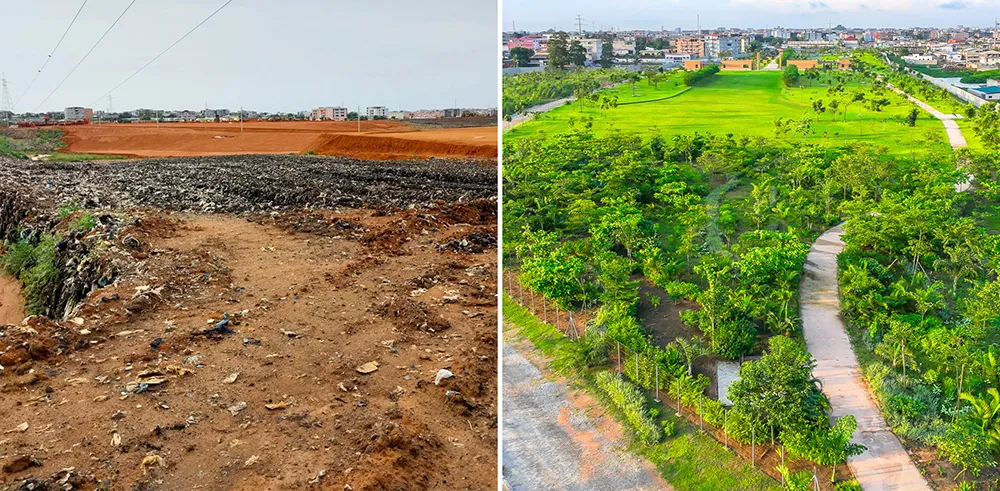
Reclaiming and rehabilitating polluted areas to create new uses
Gregori International has developed expertise across the entire process of remediating end-of-life landfill sites and other contaminated sites: from preliminary studies and remediation strategies through to the specialised technical phases of gas and leachate collection.
Until the site has been revitalised and transformed into an urban park, Gregori International and its expert partners provide a turnkey service to clients as they tackle the major environmental, social and health disasters posed by these slum areas.
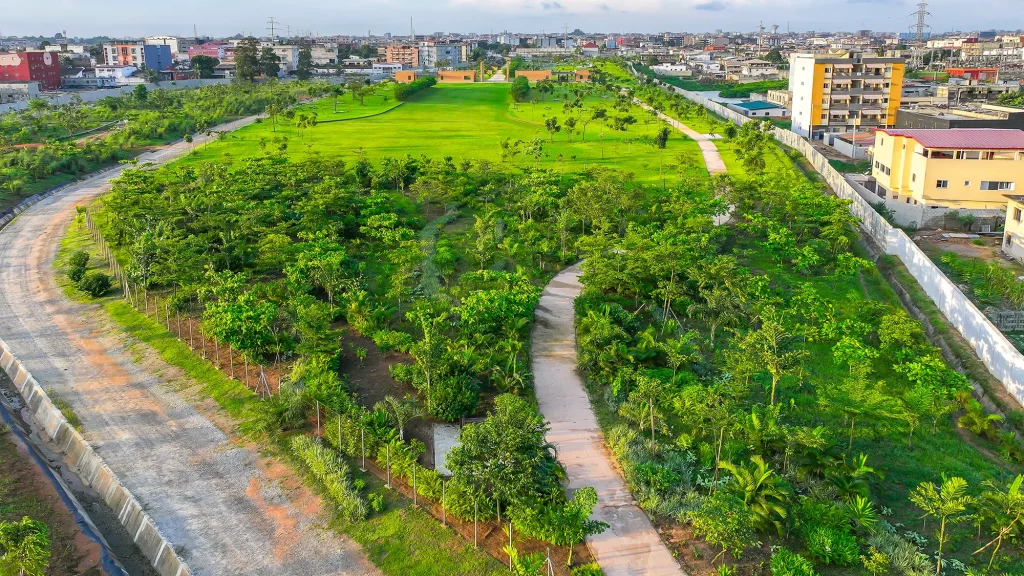
Our services rehabilitation
and revegetation
Preliminary studies, technical studies, carrying out the works, maintenance and advice
Gregori International is committed to supporting the entire process of remediating these contaminated sites, by identifying the most appropriate solutions in terms of safety and the management of environmental and social impacts, whilst keeping costs to a minimum.
The construction of a project nursery offers a major advantage in ensuring the availability of plants right from the start of the project. It enables a rigorous selection of acclimatized local plants, perfectly adapted to site conditions. This approach encourages natural biodiversity and guarantees sustainable, resilient planting. By integrating upstream planning and supply, the nursery optimizes the quality of the landscaping designed.
- Step 1: Earthworks
- Step 2: Geomembrane
- Step 3: Gas capture
- Step 4: Drainage and water management
- Step 5: Topsoil
- Step 6: Planting and landscaping

Reclaiming and rehabilitating polluted areas are real levers for sustainable transformation. These actions restore environmental quality while creating new social, economic and cultural uses. By enhancing biodiversity and the living environment, they restore meaning and attractiveness to the region.

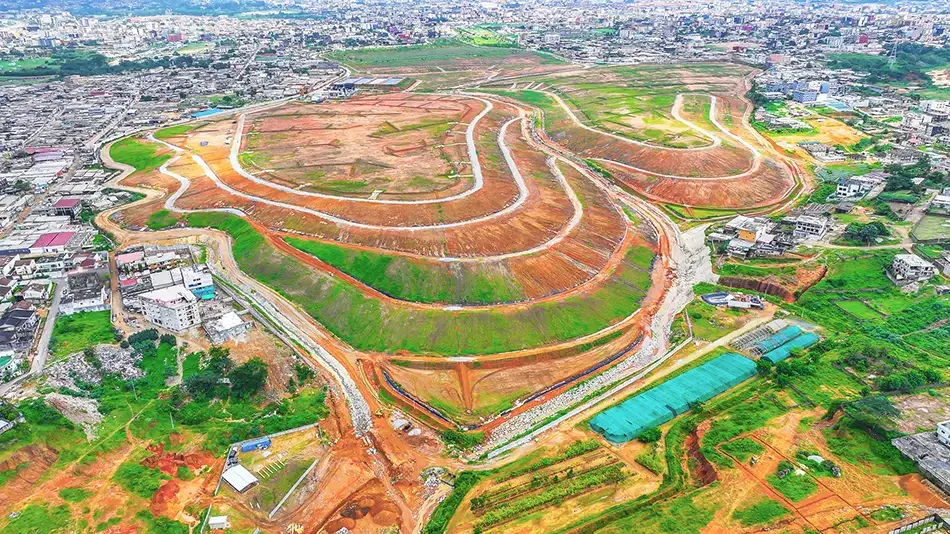
a comprehensive
approach
The innovation of this approach leads to the creation of new living spaces that are safe in terms of hygiene and sanitation, and to the development of economic, recreational and social activities.
Gregori International offers a complete diagnosis of the storage site, including: a site assessment, a preliminary study taking into account social, economic and environmental characteristics; project management tailored to your needs, support and relations with financial institutions.
technical and environmental challenges
Rehabilitation of landfills, mining sites, reforestation... and more generally of soils that have suffered from environmental degradation.
- Preliminary soil studies
- Earthworks, modelling
- Installation of overhead biogas and leachate collection networks
- Supply and installation of final cover in plantable soil
- Drainage system
- Nursery construction
- Landscaping: Transplanting, planting
Other rehabilitation
projects
Gregori International has acquired expertise in the entire process of transforming end-of-life landfills and other polluted sites, from preliminary studies and remediation strategies to the specialized technical phases of gas and leachate collection.
Gregori International and its expert partners provide a turnkey service to help clients combat the major environmental, social and health disasters that these insalubrious areas represent, right through to the beautification of the site and its transformation into an urban park.
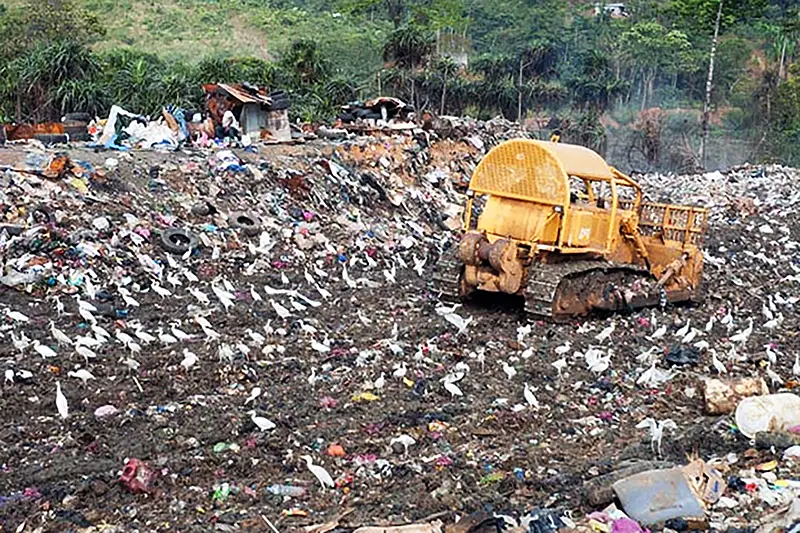
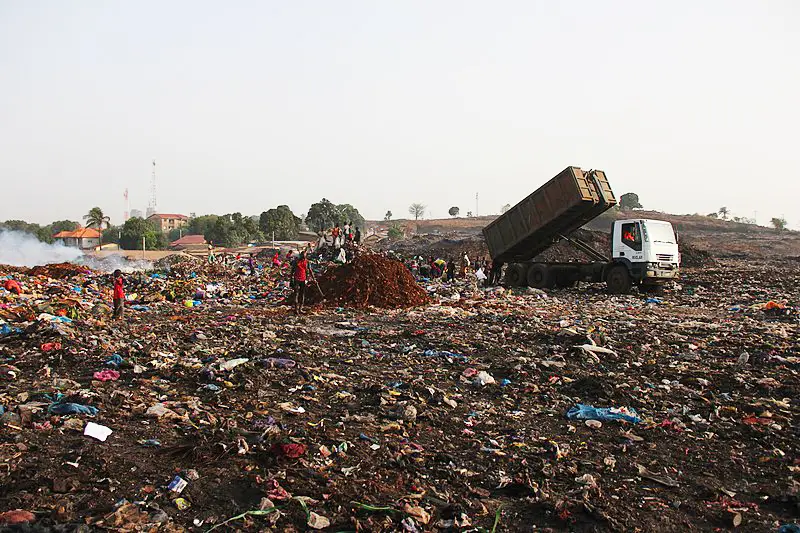

What is an environmental rehabilitation project?
An environmental rehabilitation project aims to restore a degraded site — an industrial wasteland, landfill, polluted area or altered natural area — to restore its ecological, social or economic function. It combines diagnosis, decontamination and renaturation. By treating soil, water and ecosystems, these projects sustainably improve the environmental quality and safety of sites. They are becoming an essential lever for reintegrating these spaces into responsible territorial development. The objective is to transform a degraded area into a living and sustainable territory
What is the difference between revegetation and reforestation?
Revegetation recreates a rapid herbaceous or shrubby vegetation cover, while
Reforestation involves planting trees to rebuild a forest ecosystem in the long term
What are the objectives of revegetation?
The objective of revegetation is to restore a functional plant cover on a degraded site, whether after works, pollution or erosion. Its main objectives are to:
Stabilize the soil to prevent slippage or collapse.
Limit erosion caused by wind and rain.
Improve water infiltration and recharge groundwater
Restore biodiversity by promoting the return of local flora and fauna
Enhance the landscape by restoring the site to a natural and functional appearance.
By restoring a sustainable ecosystem, revegetation reduces environmental risks and improves the integration of the site into its environment. This is a key step in ensuring the resilience and sustainability of the developments.
What techniques are used to revegetate a site?
- Hydroseeding : spraying a mixture of seeds, fibre and nutrients over large areas.
- Organic mulching : protection of the soil against erosion and maintenance of moisture
- Plantations in a row : establishment of local structuring species
- Mycorrhization : improvement of root recovery and plant nutrition
Automated watering and agronomic monitoring : ensuring sustainable and homogeneous growth
How to choose the species to plant?
- Favour local species, which are better adapted to the climate and soil conditions.
- Consider the type of soil : clay, sandy, or calcareous
- Adapt the selection to the climate : arid, humid or coastal areas
- Define the vocation of the site: ecological (restoration), landscape (enhancement) or economic (production)
- Promote biodiversity by combining complementary trees, shrubs and herbaceous plants
How much does a reforestation or revegetation project cost?
The cost of a reforestation or revegetation project depends on many factors: size of the area, type of vegetation, accessibility, site preparation and post-planting monitoring. A preliminary estimate is essential for reliable planning. Depending on the complexity, the costs can vary from a few euros to several dozen euros per m² or hectare. A detailed analysis helps to frame the budget and optimize the resources allocated.
According to specialists, a range between €5,000 and €50,000/ha, depending on the topography, the type of vegetation, irrigation and access conditions.